I’ll be honest with you.
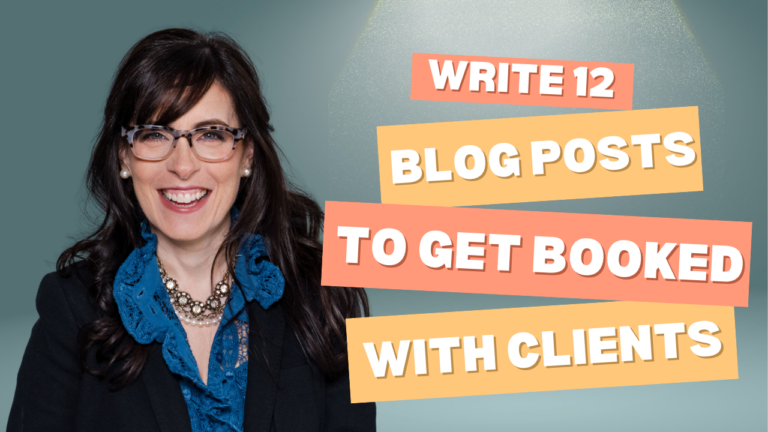
When Jana Osofsky told me she writes 12 to 18 blog posts and then just stops, I was like, wait, what?
Because isn’t that the opposite of what every marketing guru tells us? Post consistently. Show up every day. Create fresh content. Be a content machine.
Yeah, well, Jana’s over here breaking all the rules and getting her clients fully booked while spending one day a month on marketing.
One. Day. A. Month.
So naturally, I had to have her on the podcast to explain this whole capsule blog library thing she keeps talking about on Threads. Because if you’re like most of the wellness coaches in my world, you’re drowning in client work, protocol creation, lab reviews, and trying to figure out how the hell you’re supposed to also be a full-time content creator.
Spoiler alert: you don’t have to be.
The Problem With Traditional Blogging (And Why You’re Probably Doing It Wrong)
Here’s the thing about most wellness practitioners who blog.
They treat it like they’re trying to become professional bloggers.
They write a post every week. Sometimes twice a week. They stress about coming up with new topics. They panic when they miss a week. They feel guilty when they fall off the wagon entirely.
And then they wonder why all this effort isn’t bringing them clients.
Jana puts it perfectly: “We’re not bloggers. We’re business owners with a blog.”
That distinction matters.
Because bloggers who monetize with ads and affiliate links? They actually do need to write new content constantly. That’s their business model.
But you? You’re trying to get clients. You’re trying to fill your practice. You’re trying to make sales.
Those are two completely different goals that require two completely different strategies.
Most wellness practitioners fall into this trap because they don’t have a better plan. They’ve been told to “just create valuable content” and “be consistent” and “show up authentically.”
Cool. But then what?
You end up with 47 random blog posts about everything from gut health to sleep to stress management to thyroid function. No strategy. No cohesion. No clear path from content to client.
Jana had the same problem when she was a done-for-you service provider years ago. She was juggling client deliverables, managing her calendar, and trying to market her business at the same time.
She looked at her schedule and realized something that probably sounds familiar: she essentially had two full-time jobs.
One as a service provider. One as a marketer.
And that’s completely unsustainable.
So she created a different way.
Where Educational Content Actually Belongs
Now, before you spiral into an existential crisis about your entire content strategy, let me clarify something important.
Educational content isn’t completely dead. It’s just dead at the top of your funnel.
Top of funnel content is the stuff that people find you through. It’s your social media posts, your ads, your freebies. It’s the superficial, short-form content that acts as the gateway into your world.
And that’s NOT where education belongs anymore.
Education belongs deeper in your funnel.
Think about it. You probably didn’t find this blog post (or my podcast) as your first introduction to me. You probably saw me on Instagram, or a Facebook ad, or through some other random way. And THEN once you were in my world, on my email list, you started consuming my longer content.
When you sit down to listen to a podcast, you know you’re in it for the long haul. You’re putting me on while you’re driving to pick up your kid. Or you’re going for an hour walk and you’re dedicating half of that walk to my 30-minute episode.
You’re making a time commitment.
And in that format, I can actually serve you. I can teach you. I can dive deep. I can give you the full picture instead of trying to cram my entire philosophy into a 10-second reel where I don’t even have your full attention.
So save the real teaching for long-form content. For podcasts. For longer videos. For emails. For your paid offers.
But not for social media.
We have to adapt the way we’re producing content to match the way people are actually consuming it.
What the Hell Is a Capsule Blog Library?
Okay, so here’s how this actually works.
Instead of writing blog posts forever like you’re training for some kind of content marathon, you write 12 to 20 strategic blog posts that cover all the key things your audience needs to understand before they’re ready to hire you.
That’s it. That’s the library.
These aren’t random posts about whatever topic you feel like writing about that week. These are carefully planned pieces of content that address specific things your ideal client needs to hear, learn, and understand more deeply in order to feel excited and ready to buy your offer.
Once you’ve written those 12 to 20 posts, you stop writing new blog content.
I know. That probably sounds wild.
But stay with me.
Now that you have your capsule library, you repurpose those same posts across all your marketing. Your emails. Your social media. Your presentations. Your summit talks. Your podcast guest appearances.
Everything comes from those core 12 to 20 messages.
This approach does three things that random weekly blogging never will.
First, it saves you time. Obviously. You’re not constantly scrambling for new content ideas at 11 p.m. on a Sunday.
Second, it creates cohesion. Your messaging becomes consistent across every platform. People aren’t confused about what you do or who you help because you’re saying the same things everywhere.
Third, and this is the big one, you’re repeating your highest-converting messages over and over again instead of constantly introducing new ideas that confuse people.
Jana’s been doing this for years with her own business. She went from being a done-for-you Pinterest and blog writing service provider to teaching other wellness practitioners this exact system. And it works.
She tripled her prices. Stayed booked out. Built a pipeline of clients. All while working significantly less than most business owners.
Because here’s what most people don’t understand about marketing: repetition is the strategy.
The Uncomfortable Part (That You Need to Hear Anyway)
Here’s what you might have noticed as you’ve been reading this.
All of these content types require YOU to have a point of view. To take a stand. To share your opinion. To be vulnerable. To potentially piss people off.
And that’s terrifying.
Because not everyone is going to agree with you.
I shared a simple thread the other day that said, “Hot take: Your audience does not give an F about nervous system regulation.”
And people lost their minds.
I got 70+ comments and most of them were pretty pissed at me. They completely missed the point of the post (which was that it doesn’t belong in your marketing and messaging, even though it might be important in your actual work with clients).
People were triggered. They were angry. They thought I was dismissing an entire field of work.
And yeah, it stung a little. Even when you know you’re right, it’s still uncomfortable when people come at you.
But here’s the truth that you need to tattoo on your brain.
You’re going to get it wrong sometimes. And people aren’t going to agree with you even when you’re right.
And that’s okay.
How I’ve Been Wrong (And It’s Fine)
When I first started as a health coach, I believed in the super restrictive diet. Gluten-free, dairy-free, grain-free. Basically fun-free.
And I’m an incredibly disciplined person. So when someone gives me instructions, I execute them perfectly. Sometimes to a fault.
I followed that diet to the letter. For YEARS.
And you know what happened?
I gained 30 pounds.
I was exhausted. I felt like garbage. And I’m only 5’2″, so 30 pounds is a LOT on my frame.
I had spent my whole life as an athlete, as an incredibly fit person. And suddenly I was overweight and miserable.
I thought my metabolism was broken. I thought there was something deeply wrong with me. And I kept recommending this same diet to my clients because I truly believed it was the answer.
Spoiler alert: It wasn’t.
What I learned over time is that by cutting out all carbs and replacing them with fat, I was unknowingly adding a ton of calories to my diet. The diet itself was making me gain weight.
These days, I believe in an inclusive diet. I eat whatever I want within a calorie limit. I don’t fear gluten or dairy or carbs anymore. I prioritize whole foods, but I’m not afraid of anything.
And I’ve never felt better.
But that means I’ve had to walk back so much of what I used to preach. I’ve changed my opinion on countless things over my 15 years in the health industry. I’ve shouted things from the rooftop that I later had to publicly retract.
It’s okay to be wrong. It’s okay to evolve. It’s okay to change your mind when new information comes to light.
And it’s also okay to be RIGHT and still have people crucify you for it.
We’re not responsible for other people’s triggers. We have no control over how people react to our content.
I’ve sent the same email and gotten five responses saying, “Wow, this was so helpful, thank you so much,” and five other responses saying, “This is manipulative and gross.”
Same email. Completely different reactions.
Why Repeating Yourself Is Actually Good Marketing
This is where most wellness practitioners freak out.
They think, “But won’t my audience get bored if I keep saying the same things?”
Short answer: no.
Long answer: hell no.
Jana uses this concert analogy that’s absolutely perfect.
Imagine your favorite band is coming to town. You immediately buy tickets. You get all excited. You plan your outfit. You show up ready to have the best night.
What part of the concert are you most excited about?
Is it when they say, “Okay, now we’re going to play some new music from our album that’s coming out in September”?
No. That’s when everyone goes to get drinks or hit the bathroom.
The part you love, the part you paid for, the part that gives you goosebumps, is when they play all their greatest hits. The songs you grew up with. The ones you’ve listened to a thousand times. The ones you know every word to.
That’s what you came for.
Your audience is the same way.
When they hear you say something they’ve heard you say before, they don’t think, “Ugh, I’ve heard this already.”
They think, “Yes, that’s why I follow her. That’s what she’s known for. That’s what I love about her.”
Repetition builds trust. It shows you’re steadfast in your beliefs. It proves you’re not just following trends or changing your mind every week based on what’s popular.
It makes you memorable. It makes you referable. It makes you the person people think of when they need help with the specific thing you talk about all the time.
I talk about niching constantly. Like, ad nauseam. Sometimes I want to barf because I’ve talked about it so much.
But you know what? My posts about niching are always my highest-performing content. And sometimes I literally repost the exact same post from two months ago, and it takes off again.
Because people still need help with niching. And if they’re still following me, it’s because they still need what I’m talking about.
Jana made another point that really stuck with me. Sometimes people hear your message 10 times, but it doesn’t click until the 11th time because something happened in their life that made them finally ready.
Maybe they had a rough day. Maybe their symptom flared up. Maybe they’re just at a different emotional place than they were the last time they heard you say it.
If you hadn’t repeated yourself, you wouldn’t have been top of mind in that moment.
So yeah. Repeat yourself. Often. Without apology.
Your audience isn’t bored. They’re being prepared to buy from you.
How to Figure Out What Your 12 to 18 Posts Should Actually Be About
Okay, so you’re sold on the idea. You want to create your capsule blog library.
But how do you know what to write about?
This is where most people get stuck because they think it’s just about covering the core topics related to their niche.
If you help people with gut health, you write about gut health topics. If you help people sleep better, you write about sleep. Makes sense, right?
But Jana’s approach is more nuanced than that.
She doesn’t just ask, “What are the core things my audience needs to know?”
She asks, “What are the key things my audience needs to hear, learn, and understand more deeply in order to feel ready and excited to buy my specific offer?”
That’s a totally different question.
And it requires you to think about a few specific categories.
First, what problems and desires does your ideal client know they have that they want to solve? Not the problems you think they should care about. The ones they actually know about and are actively trying to fix.
This is where wellness practitioners mess up constantly.
They start writing blog posts about adrenal fatigue, leaky gut, nervous system dysregulation, and all these root cause things that, yes, their clients need to address inside the program.
But when you put that stuff in your marketing, it doesn’t resonate.
Because your ideal client isn’t lying awake at night thinking, “I really need to heal my leaky gut.”
They’re thinking, “Why can’t I lose this belly fat? Why do I feel like crap all the time? Why don’t my jeans fit anymore?”
You have to catch their attention with the problem they know they have, not the expert-level diagnosis you’re going to give them later.
Second, what beliefs do they currently have that might be standing in their way? What myths about your modality do they believe? What objections or hesitations do they have about your particular way of delivering results?
These are the posts that shift their thinking and remove the barriers between them and hiring you.
Third, what questions do people have about how your offer actually works? Sometimes we forget to talk about the basics because they seem so obvious to us. But those clarifying posts can be incredibly reassuring for someone who’s on the fence.
Jana teaches a nine-pillar system inside her program for planning these topics. But the core idea is this: you’re measuring twice and cutting once.
You don’t want to write a bunch of blog posts about the wrong things. So you take time upfront to really think through what your audience needs to move from cold lead to excited buyer.
And here’s the beautiful part. If you’re not sure what your audience needs, you don’t have to guess.
Janet recommends using ChatGPT to help you brainstorm. And before you roll your eyes, hear me out.
ChatGPT is actually really good at reminding you of the basic-level problems your audience faces. When you’re deep in expert brain, thinking about high-level stuff, AI can pull you back down to earth and remind you of the fundamentals.
You can also do traditional market research. Go into Facebook groups where your ideal clients hang out. Read Reddit threads. Look at what people are actually asking about.
But AI gives you a solid starting point, especially if you haven’t worked with clients yet or if you’re pivoting your niche.
The key is to be specific. Tell ChatGPT exactly who you want to help, what problems they’re facing, and what you want them to understand. Then let it help you generate ideas.
You’re not outsourcing your thought leadership. You’re using AI as a brainstorming partner to help you see gaps in your content plan.
The Magic of Long-Form Content (And Why 500 Words Isn’t Enough)
Here’s something else Janet said that made me sit up and pay attention.
Her blog posts are typically 3,000 to 4,000 words long.
I know some of you just clutched your pearls.
But here’s why that matters.
Long-form content gives you space to go deep. It lets you actually explain your framework, shift beliefs, demonstrate your expertise, and build trust.
You can’t do that in 500 words.
Janet uses nine different outlines depending on the type of content she’s writing. Her students fill out prompts that help them brain-dump their thought leadership, and then custom GPTs do the heavy lifting of turning those thoughts into polished blog posts.
But even with AI help, you need space to be persuasive. You need room to address objections, share stories, provide examples, and walk people through your way of thinking.
That’s how you get people ready to buy.
Now, Janet will also tell you it’s not really about hitting a specific word count. It’s about organizing information well, writing at the right grade level so people understand it, and giving enough value without oversharing.
You want to educate people enough that they trust you. But not so much that they think they can do it on their own.
That balance usually requires more space than most people think.
So if your blog posts are currently 800 words of surface-level tips, you’re probably not converting readers into clients. You’re just giving away information without building the desire for your offer.
Go deeper. Take your time. Let people really understand how you think and why your approach works.
How to Actually Use Your Capsule Blog Library
Okay, so you’ve written your 12 to 18 strategic blog posts. Now what?
This is where the repurposing magic happens.
Every piece of content you create from this point forward comes from your capsule library.
Your Instagram posts? Pull from your blog.
Your email newsletters? Pull from your blog.
Your Facebook content? Pull from your blog.
Your Threads posts? Pull from your blog.
Your summit presentations? Pull from your blog.
Your podcast guest appearances? Pull from your blog.
See the pattern?
Janet literally sets aside one day per month to batch create micro content from her blog posts. She breaks them down into smaller pieces, repurposes the main ideas, and schedules everything out.
One day. Per month.
And during that one day, she’s not stressed about coming up with new ideas. She’s not staring at a blank screen wondering what to post. She’s just mining her existing blog content for all the gold that’s already there.
This is how you stop being a content hamster on a wheel and start being a strategic business owner.
You’re not creating content for the sake of creating content. You’re strategically repeating your highest-converting messages across every platform where your ideal clients hang out.
And because those messages are consistent, everything feels cohesive. Your brand makes sense. Your audience knows what you stand for. They know what to expect from you.
You’re not talking about gut health on Instagram, thyroid issues in your emails, and stress management at summits. You’re talking about the same core things everywhere, just in different formats.
That consistency is what builds trust. That’s what makes people feel safe enough to hire you.
Why Your Blog Posts Need to Live on Your Website
One question that comes up a lot: can you just publish these posts on Substack or LinkedIn instead of your website?
Janet’s answer: you can, but you shouldn’t.
Here’s why.
When someone reads your blog post on your website, they’re close to your sales page. They’re close to your booking link. They’re close to your contact form.
There’s no friction between learning about you and hiring you.
But if they’re reading your content on Substack or LinkedIn, there’s distance. There’s extra steps. There’s more chances for them to get distracted or lose momentum.
You want people to be able to go deep with you, understand your approach, get excited about your offer, and then immediately take action.
Proximity matters.
Plus, when your blog is on your website, you control the experience. You can interlink posts so people read multiple pieces. You can add calls to action exactly where you want them. You can guide people through a journey that ends with them booking a call or buying your program.
That’s strategic. That’s smart. That’s how you convert readers into paying clients.
The Bottom Line
Look, I get it. Writing 12 to 18 blog posts sounds like a lot of work upfront.
But compare that to writing a new blog post every single week for the rest of your life.
Or spending hours every day trying to come up with fresh social media content.
Or constantly feeling behind because you’re always scrambling to create something new.
The capsule blog library approach front-loads the work. You invest time once to create your strategic content. Then you repurpose it forever.
You’re not a content creator. You’re not a blogger. You’re not an influencer.
You’re a business owner who needs a marketing system that actually works without consuming your entire life.
This is that system.
And here’s what I love most about it. It’s not just a time-saver. It’s a trust-builder. It’s a consistency creator. It’s a way to become known for your thing without burning out.
You get to focus on the work you’re actually good at, which is helping your clients get results. And your marketing runs in the background, repeating your highest-converting messages and bringing new people into your world.
That’s the kind of business I want. That’s the kind of business Janet has. And that’s the kind of business you can build too.
If you want to learn more about Janet’s capsule blog library strategy, she has a free blog strategy training that walks through the whole process. Go check it out.
And if you want to stalk her like I do, find her on Threads. She’s hilarious, she’s helpful, and she actually knows what she’s talking about.
Because at the end of the day, marketing doesn’t have to be complicated. It doesn’t have to be overwhelming. And it definitely doesn’t have to consume all your time.
You just need a better strategy.
This is it.