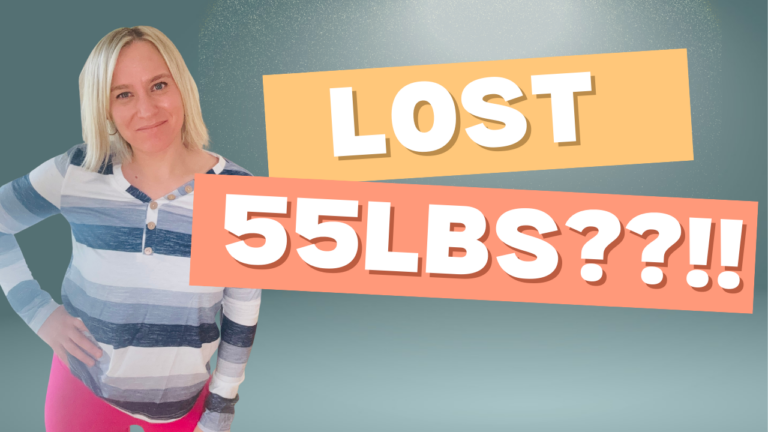
If you told me a few years ago that my weight loss journey would teach me more about business than any marketing course I’ve ever taken, I would’ve laughed in your face. But here we are — 55 pounds lighter and with a business lesson I’ll never forget.
This isn’t just a weight loss story. This is about the dangerous trap that health coaches, practitioners, and online business owners fall into every single day: convincing yourself that the basics don’t apply to you, chasing complicated solutions, and wondering why nothing works.
If you’ve ever uttered the words “I’ve tried everything and nothing is working,” this one is for you. I’m going to walk you through exactly what happened to me physically, what finally changed, and how the same destructive pattern is almost certainly playing out in your business right now — whether you realize it or not.
How Becoming a Health Coach Actually Made Me Fat
Here’s the part nobody talks about: becoming a health coach actually made me gain weight. I know — the irony is painful. You’d think that immersing yourself in the world of health and nutrition would make you the healthiest, leanest version of yourself. But for me, it did the exact opposite.
When I became a health coach in my late twenties, I got sucked into a world of advice that sounded really smart and science-y. Calories don’t matter. Cut gluten. Cut dairy. Cut grains. Go low carb. The messaging was everywhere — in the podcasts I listened to, the influencers I followed, the certifications I invested in. And I drank the Kool-Aid hard. Not just a sip. I chugged it.
I was eating mostly protein and fat, but here’s the thing about that approach — you can only eat so much protein before your body says enough. So what I was really doing, without realizing it, was eating a ton of fat. And fat is the most calorie-dense macronutrient there is, coming in at 9 calories per gram compared to 4 for protein and carbs.
I was unknowingly over-consuming calories in a massive way. But I couldn’t see it. I literally could not see it because I was 100% convinced that calories didn’t matter. I had bought into this narrative so deeply that the actual problem was completely invisible to me. It was like trying to find your glasses when they’re sitting on top of your head — the answer was right there the whole time, but my belief system had blinded me to it.
And look, I’m not someone who lacks discipline. I’m like a golden retriever with a stick — when I decide I’m doing something, I do not let go. I develop habits easily. When I commit, I commit fully. So when I latched onto this wrong advice, I executed it like my life depended on it. I went all in on low carb. I went all in on cutting food groups. I went all in on everything except the thing that actually mattered.
That discipline, applied to the wrong strategy, didn’t just stall me. It literally buried me. And that distinction is something I need you to really sit with, because it matters for everything we’re going to talk about next.
Chasing Complicated Solutions While Ignoring the Obvious
Over the next several years, I tried everything you can imagine to fix what I thought was a broken body. I did fasting — intermittent, extended, you name it. I tried every elimination diet on the planet. I bought labs and pored over my bloodwork looking for the hidden culprit. I wore a continuous glucose monitor for almost a year, tracking every spike and dip like my life depended on it. I was completely convinced my metabolism was broken, that my hormones were off, that something invisible inside me was fundamentally messed up.
And here’s the thing that made it even more confusing — I’m an incredibly active person. I climb mountains. I mountain bike. I ski. I hike constantly. I’ve been an athlete my entire life. So I kept thinking, “There’s no way this is about how much I’m eating. I exercise enough. Eating healthy should be enough. Something else must be going on.”
But nothing I tried was working. And over that time, I gained about 30 to 45 pounds. Then in 2024, I had a baby and gained more weight with the pregnancy, as you do. At one point, about three months postpartum, I stepped on the scale and saw 198 pounds. I’m 5’2″.
That number hit me like a truck. And it wasn’t about the pregnancy weight — that part was expected. I probably gained about 25 pounds with the baby, and that’s completely normal. What shook me to my core was the realization that I had gone into pregnancy already carrying all this extra weight. Me. A lifelong athlete. A competitive athlete in high school. Someone who had always been fit and deeply passionate about health and nutrition.
I just stood there staring at that number thinking, “How did I get here? This isn’t who I am.”
I had all the resources at my fingertips. I was literally a health coach. I had certifications, knowledge, access to every tool and protocol out there. And yet I was the most overweight I had ever been in my life. Something had to change.
The Moment Everything Changed
Finally, I stopped listening to the noise and went into the actual research. I have to give a massive shout out to Lane Norton, because his work really broke it down for me in a way that cut through all the confusion. And everything — all of it, every study, every meta-analysis — came back to the same basic, boring thing: calories in versus calories out.
Now, I know there’s nuance. I’m not saying nothing else matters. An undiagnosed hypothyroid can lower your BMR. Metabolic adaptation is real. There are factors that play into the equation. But at the core, at the fundamental level, it truly is about energy balance. And I had been running from that truth for almost a decade.
I was skeptical at first. I kept telling myself, “No, there’s more to it. This is not true for my body. My situation is different.” But I decided to just try it. Really try it. Not the half-hearted, loose tracking I had done at various moments in the past. I mean actually doing it properly.
I bought a food scale. I downloaded MyFitnessPal. I started weighing and tracking every single thing I put into my mouth. No guessing, no estimating, no “close enough.”
Three weeks later, I was down two pounds.
And I just stood there in my kitchen like — this is it. This is the thing. This is the thing I used to do in my twenties when I was lean and fit. I already knew this worked. But I’d been told it didn’t matter anymore, and I believed it. Except it did matter. It always mattered.
Since then, I’ve lost 55 pounds. I’m not at my goal yet, but I’m close. And it wasn’t the fasting, the glucose monitor, the gluten-free protocols, or the low-carb diets that got me here. My metabolism was not broken. I was not in starvation mode. None of those scary narratives were true. I was simply overeating. That’s it. That’s the whole story.
The “Broken Metabolism” of Your Business
Now here’s where this gets really relevant for you, and why I’m sharing this story on a business podcast.
This experience reminds me so much of what I see every single day with the health coaches and practitioners I work with. They come to me saying the exact same thing I used to say about my weight: “I’ve tried everything and nothing works. My business is broken.”
And I get it — because that was literally me. I had done it all. I had tried everything. Nothing was working. My metabolism was broken. Except it wasn’t. And here’s the hard truth: if I had actually tried everything, something would have worked.
The same is true for your business. If you had truly tried everything, something would have worked by now. What’s more likely is that you’ve tried a lot of complicated things, or maybe tried some things but didn’t fully commit to them or stick with them long enough, and you’re skipping over the most obvious fundamentals.
You might be convinced that something invisible is broken in your business. The algorithm hates you. The market is too saturated. Your niche is overcrowded. People in your space just don’t have money. Does any of that sound familiar? Because those beliefs do the exact same thing that my “broken metabolism” belief did to me — they send you chasing complicated solutions while you ignore the fundamentals sitting right in front of your face.
The Four “Calories” of Your Coaching Business
Just like weight loss comes down to calories in versus calories out, your business comes down to four non-negotiable fundamentals. If you are not making money, if you’re not getting consistent sales, I guarantee you are missing at least one of these. Usually two. These are the things your business literally cannot survive without.
1. Traffic: Consistent New Eyeballs on Your Business
Traffic means new people seeing your stuff consistently. Not just a few hundred people catching your latest post — real, consistent, new eyeballs being driven to your business on a regular basis. And it needs to be quite a bit. We’re not talking about a trickle here. You need a real, steady flow of new people discovering you.
This is where most coaches fall short, and there’s a big reason why. Most coaches rely on organic social media alone. And here’s the reality of organic social in 2025: reach is declining, engagement is declining, and you never know which post is going to hit or go viral. The algorithm is unpredictable and you have essentially zero control over how many people see your content on any given day.
Even worse, the posts that get the most traction often aren’t the ones that bring you clients. Think about it — your most viral reel is probably a funny meme or a relatable Giphy or some surface-level, feel-good content that makes people laugh and hit share. That stuff is great for visibility, but it’s typically very superficial. It doesn’t build the kind of trust and authority that turns a stranger into a paying client.
That kind of content can generate traffic, yes. But we need to go way beyond that. We need a way to capture that traffic and do something meaningful with it, which brings us to the next piece.
2. Leads: Getting People Off Social and Onto Your List
Here’s something that most coaches don’t fully grasp when they’re starting out, and honestly something I didn’t understand either when I first got into business: roughly 95% or more of the people who encounter your content will never become a client. Let that sink in. Conversion rates in this industry can be as low as 1 to 2% of your audience. Sometimes even less than that.
So when you think about it that way, adding 30 people to your email list every month is probably not going to build the business you want — especially if you’re running a group program or a one-to-many offer where you need volume.
And here’s the critical distinction that changed how I think about everything: a follower is not a lead. I do not consider a follower a lead. Period. Someone sliding into your DMs and having a real conversation with you? That’s a lead, because you have direct access to communicate with them. But your followers? Social media doesn’t even show your posts to most of them anymore. The algorithm shows your posts to people who engage with your content, and people are way less likely to follow accounts than they used to be. A follower is just not a reliable lead.
So if you’re getting sales when people do come into your offer, and your clients get results once they’re inside, but you just don’t have enough clients — it’s almost certainly a traffic and leads problem. You don’t have enough eyeballs discovering you, and you don’t have enough of those eyeballs turning into leads on your email list or in your DMs.
3. Conversions: Turning Leads into Buyers
Once you have traffic flowing and leads building, you need a sales mechanism — something that drives sales consistently and, when tested over time, actually becomes predictable. This isn’t about having the perfect Instagram bio or the most aesthetic website or the cleverest tagline. This is about having a repeatable, tested process that moves people from “interested” to “invested.”
A lot of coaches skip this piece or leave it to chance. They post content, hope people reach out, and then try to sell on the fly. But you need a system. Something you can look at and say, “When I put X number of leads through this process, Y number of them buy.” That predictability is what turns a hobby into a real business.
4. Fulfillment: Delivering the Goods
This is usually what coaches and practitioners absolutely crush. You’re great at what you do. Your clients get results. Your program works. The delivery piece is probably already dialed in for you, and that’s awesome — it’s the reason you got into this work in the first place.
But here’s the uncomfortable truth: fulfillment alone doesn’t keep the lights on if nobody knows you exist. You can have the best program in the world, but if you’re missing traffic, leads, and a conversion mechanism, it doesn’t matter. The world will never see your gift.
Discipline Applied to the Wrong Strategy Will Bury You
This is the part that really keeps me up at night, because it’s the most painful lesson in all of this.
I have a lot of discipline. When I commit to something, I go all in. And that’s exactly what made the wrong advice so destructive — I executed a bad strategy with incredible consistency for years. That’s how I gained all that weight. Not because I was lazy or undisciplined, but precisely because I was disciplined about the wrong things.
The same thing happens in business all the time, and I see it constantly. Maybe you’re investing in another certification when you don’t even have a lead magnet or a way to get people on your list. Maybe you’re rewriting your Instagram bio for the hundredth time, but you’ve never actually connected with a potential client in DMs. Maybe you’re spending money on a fancy new course about VSLs or low-ticket offers or some complex funnel strategy when you haven’t nailed the basics yet.
You’re doing hard things. You’re putting in the work. Nobody can question your effort or your commitment. But you’re skipping the most important non-negotiables and then wondering why nothing is moving.
That’s the exact equivalent of me wearing a $100 continuous glucose monitor on my arm while eating 2,800 calories a day and wondering why I wasn’t losing weight. The effort was real. The discipline was real. But it was all pointed in the wrong direction.
The Boring Stuff Works — And That’s the Hard Part to Accept
Sometimes the answer is embarrassingly simple. And you don’t want it to be true. Trust me, I understand that feeling more than most.
I am honestly embarrassed that for eight years I struggled with my weight. Eight years. I felt terrible about my body for nearly a decade. I felt like a stranger in my own skin because I had been fit my entire life and suddenly I didn’t recognize myself anymore. I had all the knowledge, all the resources, all the tools — and yet I was overweight and miserable about it. And the answer was the simplest thing all along. The thing I already knew to be true back in my twenties. But I got sucked into information from influencers and thought leaders that simply wasn’t true for me, and it cost me years.
I’ll be honest — I feel some anger towards the influencers I listened to who pushed these narratives. It drives me crazy because when you actually look at the research, it always comes back to energy balance. Yes, there’s metabolic adaptation, and that’s real, and sometimes you need to eat at maintenance for a while or slightly above to reset. There are layers and nuances. But calories are still the primary driver. Always have been. And I let that simple truth escape me for almost a decade. It really impacted my self-esteem, and I honestly feel a little foolish about it.
I’m not saying you’re foolish. But I am saying that sometimes the answer to your business problems is going to feel just as anticlimactic as “eat less than you burn.” And you need to be okay with that.
Your business is inherently simple at its core. You need traffic, leads, conversions, and fulfillment. That’s the whole equation. Those are the calories in, calories out of your business.
This is exactly why I have my students run Meta ads — Facebook and Instagram ads — because ads let you actually control the eyeballs on your business. You’re not waiting around hoping the algorithm blesses you today. For a very small budget, you can increase traffic, increase leads, and scale up as you go. You can actually control the input side of the equation, which means you can start to predict the output.
A lot of times we’re out here looking for some fancy strategy that’s going to change everything overnight. Maybe I need a VSL. Maybe I need a low-ticket offer. Maybe I need to drop my price. Maybe there’s some secret funnel that the gurus know about that I haven’t discovered yet. We’re searching for something complex and exciting — but the real answer is pretty boring. Traffic. Leads. Conversions. Fulfillment. You probably already have the fulfillment piece dialed. So you need to get those other three things locked in.
So Let Me Ask You This
If you’re sitting here right now feeling like you’ve tried everything, like your business is broken, like something invisible is working against you — I want you to ask yourself the same question I had to ask myself while standing on that scale at almost 200 pounds:
Have you actually tried the most obvious thing? Or have you just convinced yourself it doesn’t apply to you?
Because I spent nearly a decade convinced that the basics didn’t apply to me. That my body was different. That my situation was more nuanced. That I was too smart for the simple answer. And all it cost me was years of frustration, declining self-esteem, and a whole lot of unnecessary suffering.
Don’t make the same mistake with your business. The fundamentals aren’t beneath you — they’re the foundation underneath everything that actually works. Get your traffic right. Build your leads consistently. Nail your conversion mechanism. Deliver incredible results. That’s the whole game. There is no secret fifth step.
It’s simple. It’s boring. And it works.
Listen to the full episode of The Wealthy Coach Podcast (Ep. 323) to hear the complete story and get even more insight into the fundamentals your coaching business might be missing. New episodes drop every Monday.