gigs, events, and flights.
I’ve been there. Sitting in my probably-ripped Lululemons, laptop open, a half-eaten Larabar stuck to a napkin on the table. I just wrapped up a live webinar, poured my heart and soul into it, and… crickets. Zero sales. If you’ve ever felt that gut-wrenching disappointment, that feeling of “What am I even doing wrong?”—you’re not alone. Many entrepreneurs, especially in the health and wellness space, believe that if their program isn’t selling, it must mean they’re a failure or their program is terrible.
Let me be brutally honest with you: that’s probably not the problem. The issue isn’t a lack of skill or passion. It’s often a lack of understanding of a few critical business principles. You can’t just hope, pray, or manifest your way into a thriving business. There’s actual math involved. There are conversions to track and strategies to implement.
For years, I had zero clue how any of this worked. I thought building a great program was enough. It’s not. In this guide, I’m going to break down the five most common reasons your program isn’t selling and give you the real, actionable steps to fix them. Let’s get your business on track.
1. You Don’t Have Enough Qualified Leads
This is, without a doubt, the number one reason programs fail to sell. You can have the most amazing, life-changing program in the world, but if you’re not getting it in front of the right people—and enough of them—you’ll never make consistent sales.
What’s the Difference Between a Lead and a Qualified Lead?
Let’s clear this up first. A “lead” is basically a subscriber on your email list. And yes, your email list is still the most powerful tool you have for selling your program. It’s a direct line to people who have raised their hand and said, “I’m interested in what you have to say.”
But a qualified lead is different. A qualified lead is someone who not only is on your list but also has the specific problem your program is designed to solve. They are your ideal client, living right inside your niche.
Think about it this way: if you have a program designed to help people with IBS, but your email list is full of random people you met at networking events, friends, family, and people interested in general “wellness,” you’re going to have a hard time selling. Your message won’t resonate. It’s like trying to sell steak to a room full of vegetarians.
However, if your list is filled with people who specifically downloaded your free guide on “5 Foods That Trigger IBS Flare-Ups,” you have a highly qualified audience. They’ve already told you what their problem is. Now, when you pitch your IBS program, they’re all ears.
The Myth of Organic-Only Marketing
Now, let’s talk about how you get these leads. So many entrepreneurs get stuck in the cycle of posting on social media every single day, hoping to attract clients. And it honestly irks me because there are influencers out there—who built their businesses back in 2010 when Instagram was brand new—who preach that organic marketing is all you need.
Let me be blunt: for most people starting today, relying solely on organic social media is not a sustainable strategy for lead generation. It’s slow, exhausting, and often doesn’t generate the volume of leads you need to hit your income goals. It can work, sure, but it demands an incredible amount of time and energy that most new business owners simply don’t have. You’re essentially trying to fill a swimming pool with a teaspoon.
Why Paid Ads Are Your Best Friend
If you’re serious about scaling your business and making consistent sales, you need to embrace paid advertising. I’m talking specifically about Meta ads (Facebook and Instagram). Why? Because it’s the most effective and direct way to get your message in front of a massive, targeted audience of qualified leads.
With paid ads, you can stop shouting into the void and start speaking directly to the people who need you. You can target based on interests, demographics, and behaviors, ensuring your lead magnet (your freebie) is seen by thousands of potential clients every single day. This is how you automate your lead generation and build a list that is primed to buy. It’s how you turn that teaspoon into a firehose.
Understanding the Math Behind Sales
This is the part that many creatives and healers resist, but it’s non-negotiable. You need to know your numbers. Business is a numbers game, and sales are predictable when you understand the math.
Here are some industry-standard conversion rates to keep in mind for a typical webinar or live launch model:
- Webinar Registration Rate: On average, about 2-6% of your email list will register for your free training or webinar.
- Webinar Show-Up Rate: Of those who register, about 20-40% will actually show up live.
- Sales Conversion Rate: Of the people who attend your webinar, you can expect about 1-5% to become paying customers.
Let’s do some quick math. Say your goal is to sell 10 spots in your program at $1,000 each, for a $10,000 launch.
- To get 10 sales at a 2% conversion rate, you need 500 people to attend your webinar.
- To get 500 attendees with a 30% show-up rate, you need about 1,667 people to register for the webinar.
- To get 1,667 registrants with a 4% list registration rate, you need an email list of approximately 41,675 people.
Does that number shock you? It shocks most people. And that’s if you have a qualified list. This is why you can’t just rely on posting a few times a week on Instagram. You need a consistent, predictable system for bringing in new, qualified leads every single day. That system, for most successful online coaches, is paid advertising.
2. You Have No Focus (You Need to Niche Down!)
The second biggest mistake I see is a complete lack of focus. When I ask a health coach who they help, I often get a vague answer like, “I help women lose weight,” or “I help people with their gut health.”
In today’s market, that is not good enough. The online health space is incredibly crowded. Weight loss, gut health, and fatigue are some of the most competitive markets out there. If you try to be everything to everyone, you will be nothing to no one. You need to niche down.
What Does “Niching Down” Actually Mean?
Niching down doesn’t mean your program can only help one type of person. It’s about marketing, communication, and attraction. It’s about tailoring your message so that one specific type of person feels like you are speaking directly to them.
Your program’s content might be able to help a wide range of people, but your marketing should be laser-focused.
For example, instead of a generic “weight loss program,” you could target:
- New moms who are less than six months postpartum.
- Men over 40 who follow a keto diet.
- Women going through perimenopause who want to lose stubborn belly fat.
See the difference? Each of these is a specific niche. The person in that group will see your marketing and think, “Oh, she gets me. She understands my unique struggle.” A general weight loss message won’t do that.
Choosing a less competitive space can also be a game-changer. While everyone else is fighting over the “gut health” keyword, you could focus on a more specific condition like Graves’ disease or helping people lower their high blood pressure naturally. The pool of potential clients might be smaller, but the competition is also far less fierce, making it much easier to become the go-to expert.
The Marketing Funnel Explained
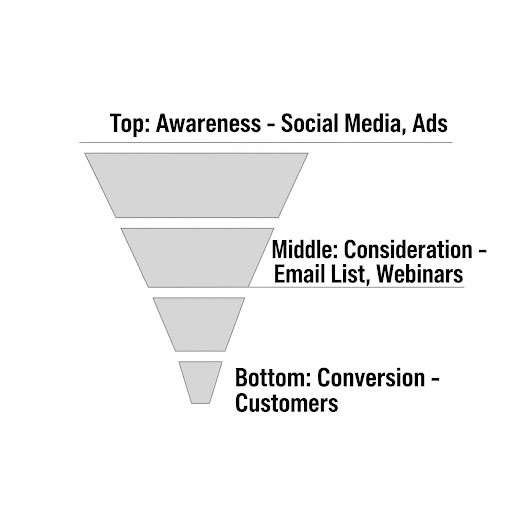
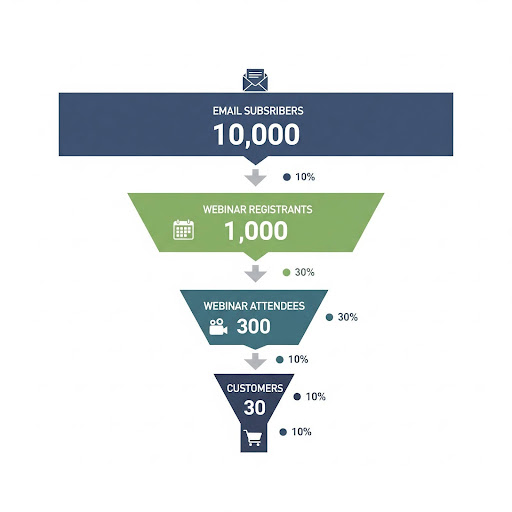
Think of your business like a funnel. At the very top, it’s wide. This is where you have all the traffic and eyeballs on your content—your social media followers, your ad viewers, etc. As people move down the funnel, it gets narrower. Some people will subscribe to your email list. A smaller number will join your webinar. And an even smaller number, at the very bottom, will become your customers.
Your job is not to keep everyone in the funnel. It’s to attract the right people at the top and effectively guide them to the bottom. Niching down is how you do that. You create a “dog whistle” message that only your ideal clients can hear, pulling them into your world while repelling everyone else. And that’s a good thing! You don’t want your list clogged with people who will never buy from you.
3. You Don’t Have a Proprietary Method
Here’s another tough-love moment: information alone does not sell anymore. We are living in an age of information overload. Anyone can go to Google and find out “how to heal their gut” or “what to eat to lose weight.” People are drowning in information, but they are starving for a clear path forward.
If your program is just a collection of information—meal plans, supplement lists, educational modules—you’re going to struggle. People don’t pay for information; they pay for implementation, simplification, and transformation. They pay for a roadmap. This is where your proprietary method comes in.
What is a Proprietary Method?
A proprietary method is your unique, step-by-step system, framework, or process that you guide your clients through to get them from Point A (their current struggle) to Point B (their desired outcome). It’s your signature recipe for success.
It takes all the confusing, overwhelming information out there and organizes it into a simple, repeatable plan. You need to give it a cool, catchy name that clearly communicates the result.
Let’s look at an example. Imagine you’re a coach who helps Christian women struggling with infertility.
- Bad Program Name: The Infertility Program
- Good Proprietary Method Name: The Fertility Supercharge Method™
Your method could be a 4-step process:
- Step 1: The Foundation Phase: Focusing on mindset and faith.
- Step 2: The Nourish Phase: Implementing a fertility-boosting diet.
- Step 3: The Detox Phase: Removing environmental toxins.
- Step 4: The Optimize Phase: Using targeted supplements and cycle tracking.
Suddenly, you’re not just selling “information about infertility.” You’re selling the Fertility Supercharge Method™, a clear, proven, step-by-step plan to help them achieve their dream. It feels tangible, professional, and much more valuable.
The Road Trip Analogy
Think of it like this: not having a proprietary method is like telling someone who wants to drive from New York to Los Angeles, “Here’s a paper map of the United States. Good luck!” They have the information, but they’ll probably get lost, frustrated, and want to give up.
Having a proprietary method is like handing them a phone with Google Maps already programmed with the destination. It gives them a clear, turn-by-turn guide. It tells them where the rest stops are, warns them about traffic, and shows them the fastest route. They know exactly what to do next, which gives them the confidence to take the journey.
Your clients want Google Maps, not a paper map. What is your unique, step-by-step process? Take some time to outline it, break it down into distinct phases or pillars, and give it a name that captures its essence. This will transform how you talk about your program and how potential clients perceive its value.
4. Your Positioning is Poor
This is a subtle but incredibly important point. Many coaches confuse their program with their offer. They are not the same thing.
- The Program is the what—the modules, the coaching calls, the community. It’s the tangible thing you deliver.
- The Offer is the how—how you position and communicate the value of your program. It’s the marketing wrapper that makes it irresistible.
You could have the best program in the world, but if your offer is weak, no one will buy it. A common mistake is “feature-dumping.” You see this on sales pages all the time:
“You get:
- 12 video modules!
- A private Facebook group!
- Weekly Q&A calls!
- One-on-one sessions!”
The problem with this is that it assumes your potential client understands the value of these features. They don’t. You have to connect the dots for them. You need to explain why they should care about each and every component of your program.
Communicating the True Value
Instead of listing features, you need to translate them into benefits and outcomes. What does that feature do for the client? How does it make their life better, easier, or faster?
Let’s reframe that feature list:
- Instead of: “12 video modules.”
- Say: “You get lifetime access to 12 comprehensive video modules that break down my entire Fertility Supercharge Method™ step-by-step, so you can learn at your own pace and revisit the material anytime you need a refresher. This means you’ll never feel lost or wonder what to do next.”
- Instead of: “A private Facebook group.”
- Say: “You’ll be welcomed into our exclusive community of like-minded women on the same journey as you. This is your safe space to ask questions, celebrate wins, and get support on tough days, so you never have to feel alone in this again.”
- Instead of: “Weekly Q&A calls.”
- Say: “Join me for live weekly Q&A calls where you can get your personal questions answered directly by me. This ensures you get the customized support you need to overcome any hurdles, saving you from hours of fruitless Googling.”
You’re not just selling a program; you’re selling a transformation. You’re selling confidence, clarity, support, and a guaranteed path to a result. Your positioning needs to reflect that. Go through every single piece of your program and ask yourself, “Why should my client care about this?” Then, articulate that “why” in your marketing.
5. You’re Just a Commodity
This last point ties everything together. If you’re a general health coach with no niche, no proprietary method, and poor positioning, you are a commodity. A commodity is something that is easily replaceable. If a potential client sees you as just another “health coach,” they will base their decision on one thing and one thing only: price.
This is a race to the bottom that you will never win. There will always be someone willing to charge less than you.
To escape the commodity trap, you need to become a category of one. You need to be so unique and specialized that you have no direct competition.
How do you do this? By implementing everything we’ve just talked about:
- Niche Down: Stop being a “weight loss coach” and become “the coach who helps perimenopausal women lose belly fat using a carb-cycling approach.”
- Create a Proprietary Method: Develop your signature system (e.g., The “Hormone Harmony Method™”) that provides a clear, step-by-step roadmap.
- Perfect Your Positioning: Communicate the incredible value and transformation your program provides, not just the features.
- Build a Personal Brand: Let your personality shine! Share your story, be authentic, and connect with your audience on a human level. People buy from people they know, like, and trust.
When you do this, you’re no longer just “a” health coach. You are the person to go to for a very specific problem. You create your own category, and in a category of one, you get to set the price. You attract dream clients who are excited to pay you because they know you are the only one who can truly solve their problem.
It’s Time to Take Action
Reading this blog post is a great first step, but insight without action is useless. You’re now aware of the key reasons your program might not be selling. The next step is to do something about it.
- Audit Your Leads: Are you generating enough qualified leads? If not, what is your plan to fix it? It’s time to seriously consider a lead generation strategy that works, like paid ads.
- Define Your Niche: Get brutally specific about who you help. Write it down. Make it the headline on your website.
- Map Out Your Method: Grab a pen and paper and outline the step-by-step process you take clients through. Give it a name.
- Review Your Offer: Go to your sales page right now. Are you feature-dumping, or are you communicating value? Rewrite it to focus on benefits and transformation.
Fixing these issues won’t just help you sell more programs. It will give you more confidence, more clarity, and more freedom in your business. It’s time to stop feeling discouraged and start building the profitable, impactful business you deserve. You can do this.